What Does It Mean to 'Own' Digital Art on Blockchain?
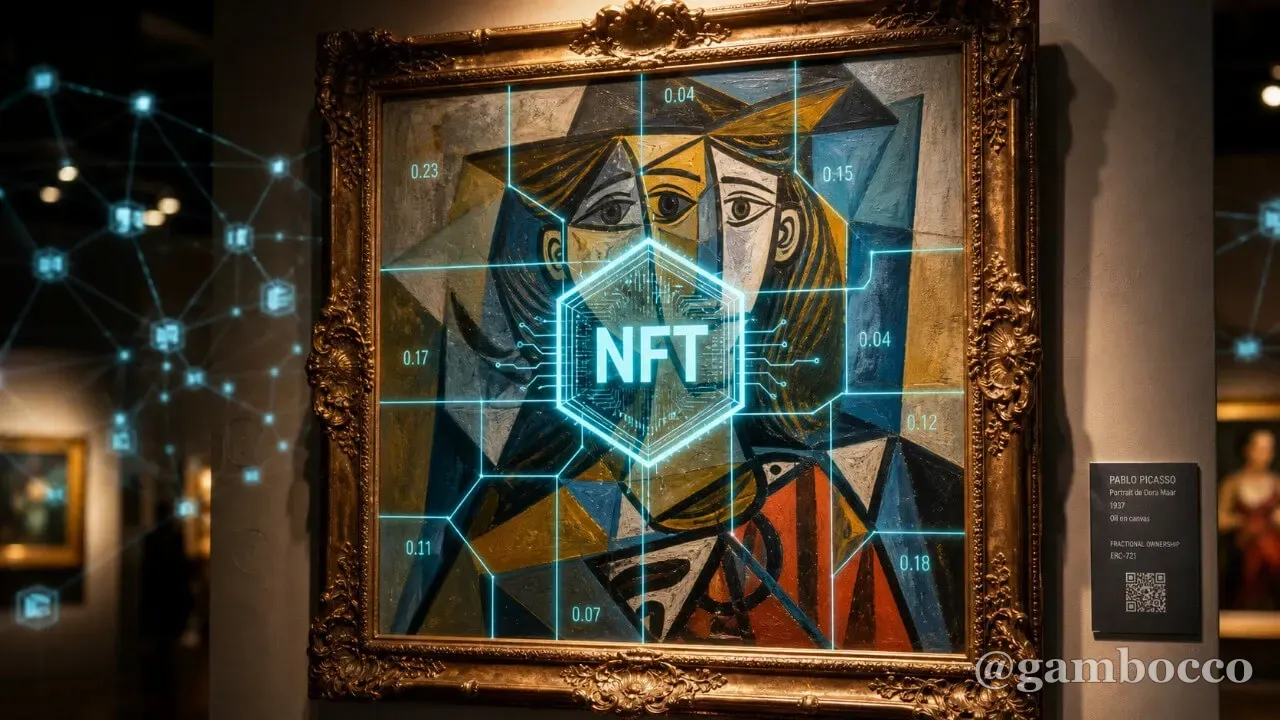
Owning digital art on blockchain means holding a token — typically an NFT — that a public ledger recognizes as the unique, verifiable record of ownership for a specific creative work. The token points to the artwork (either on-chain or via a decentralized file link) and carries the provenance chain of every previous owner.
The Idoneus × Picasso Milestone
In one of the highest-profile on-chain art deals, luxury-asset platform Idoneus acquired an original Picasso work using its native IDON token — the first time a blue-chip physical masterwork changed hands purely through a blockchain-settled digital currency. The transaction signaled to traditional collectors that public ledgers can settle multi-million-dollar art deals with full auditability.
Why On-Chain Provenance Matters More Than Price
Art fraud is estimated by the FBI's Art Crime Team to cost the market between $6–8 billion annually. On-chain provenance — an unbreakable, publicly verifiable history — is arguably a larger long-term innovation than tokenized ownership itself. See also our take on blockchain proof of authenticity.
Fractional Ownership: Art as an Asset Class for Everyone
Fractional NFT platforms let a $10 million painting be split into 10,000 tokens of $1,000 each. This is quietly democratizing access to blue-chip art and turning it into a genuine alternative asset class alongside equities and bonds.
Secondary Royalties That Actually Get Paid
For centuries, artists rarely saw a cent from secondary-market resales. Smart contracts change that: a 5–10% royalty can be enforced on every resale, forever. This is one of the most artist-favorable innovations in the history of the art market — even if some marketplaces have controversially made royalties optional.
How to Verify an On-Chain Artwork Before You Buy
- Confirm the contract address matches the artist's verified account on a marketplace like OpenSea Pro or Foundation.
- Trace the mint transaction — the very first mint should originate from the artist's wallet.
- Check the token URI resolves to a stable file (IPFS pin, Arweave, or the artist's own domain).
- Cross-reference the artist's identity via ENS or a KYC-verified profile.
The Bigger Picture
Blockchain doesn't just digitize art — it rewrites the economics of creativity. For a strategic view of trends, see NFT art trends in 2026 and NFT vs. physical art.